
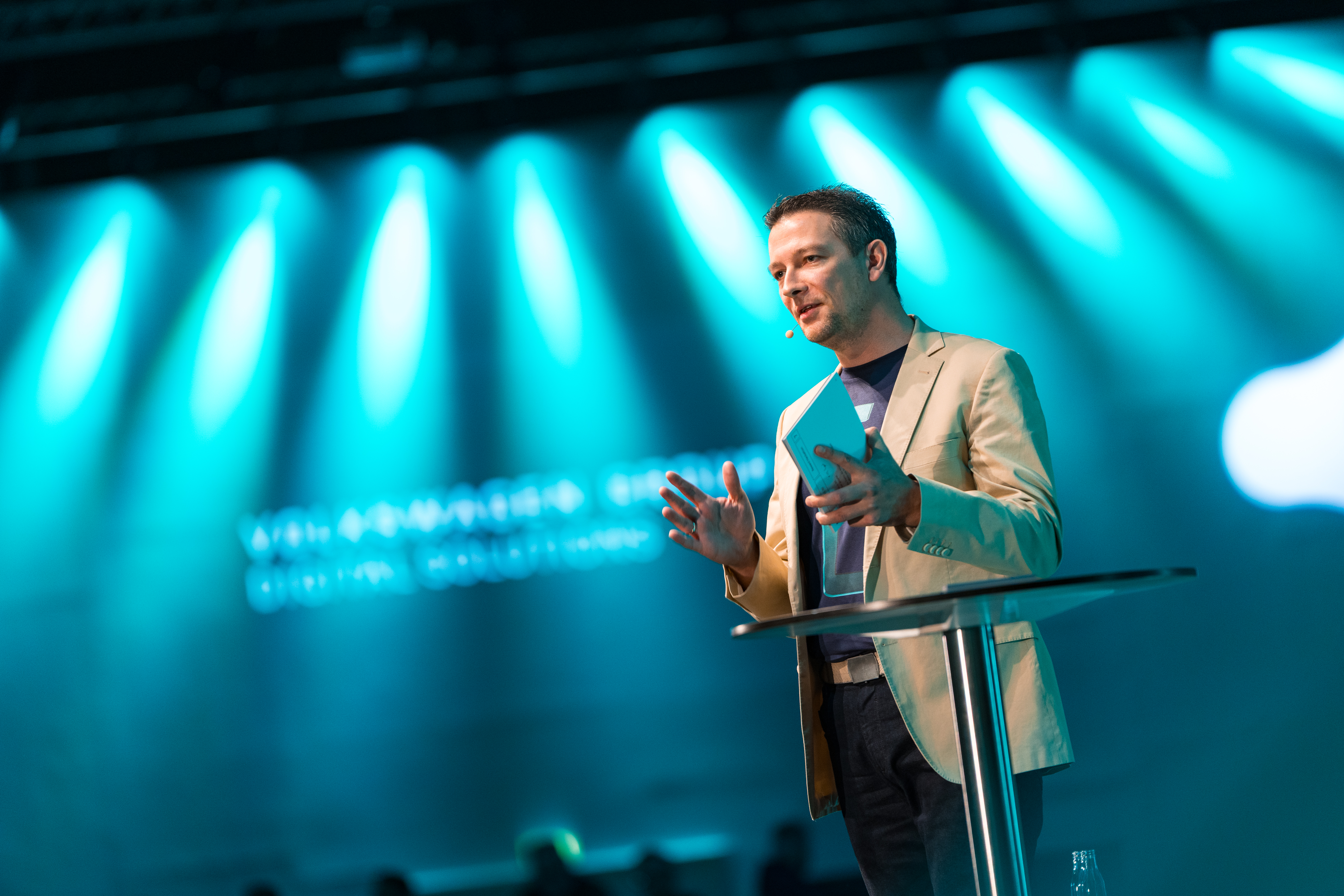
Volkswagen Group Digital Solutions no longer just wants to react – it wants to shape. With Martin Meinshausen, the company has for the first time a Chief Technology Officer (CTO) who is driving forward the technological realignment.
In this interview, he explains how visions are translated into operational goals, why the role of the CTO has only now been created – and what concrete levers are accelerating the transformation.
"The role materializes the transformation"
t3n: Martin, you are the first CTO in the history of Volkswagen Group Digital Solutions. Why is this role needed now of all times?
Martin Meinshausen: "Right now, in the middle of the transformation phase, our company needs a clear technological compass. Until now, we have often worked as IT delivery in the background – more like "clock takers" in the sense of reacting to requirements. But the expectations placed on us have changed: We ourselves set the pace and provide new technological impulses. As the first CTO, I can strategically drive and support precisely this realignment."
t3n: Where has the company been "passive" so far – and where is it now setting its own accents?
Martin Meinshausen: "In the past, we have primarily reacted to requirements. Our teams have done excellent work, but mostly on behalf of others – for example, implemented specific software products specified by the company. There was a lack of creative freedom to bring in their own ideas. So we were often a solution provider in the background, but rarely a source of inspiration. In the future, we will set our own accents.
In concrete terms, this means that we initiate technological improvements and innovations before the "order" comes from outside. An example: In the past, we might have been waiting for the order to digitize a process. Today, we ourselves recognize optimization potential and develop a prototype that we propose to the department."
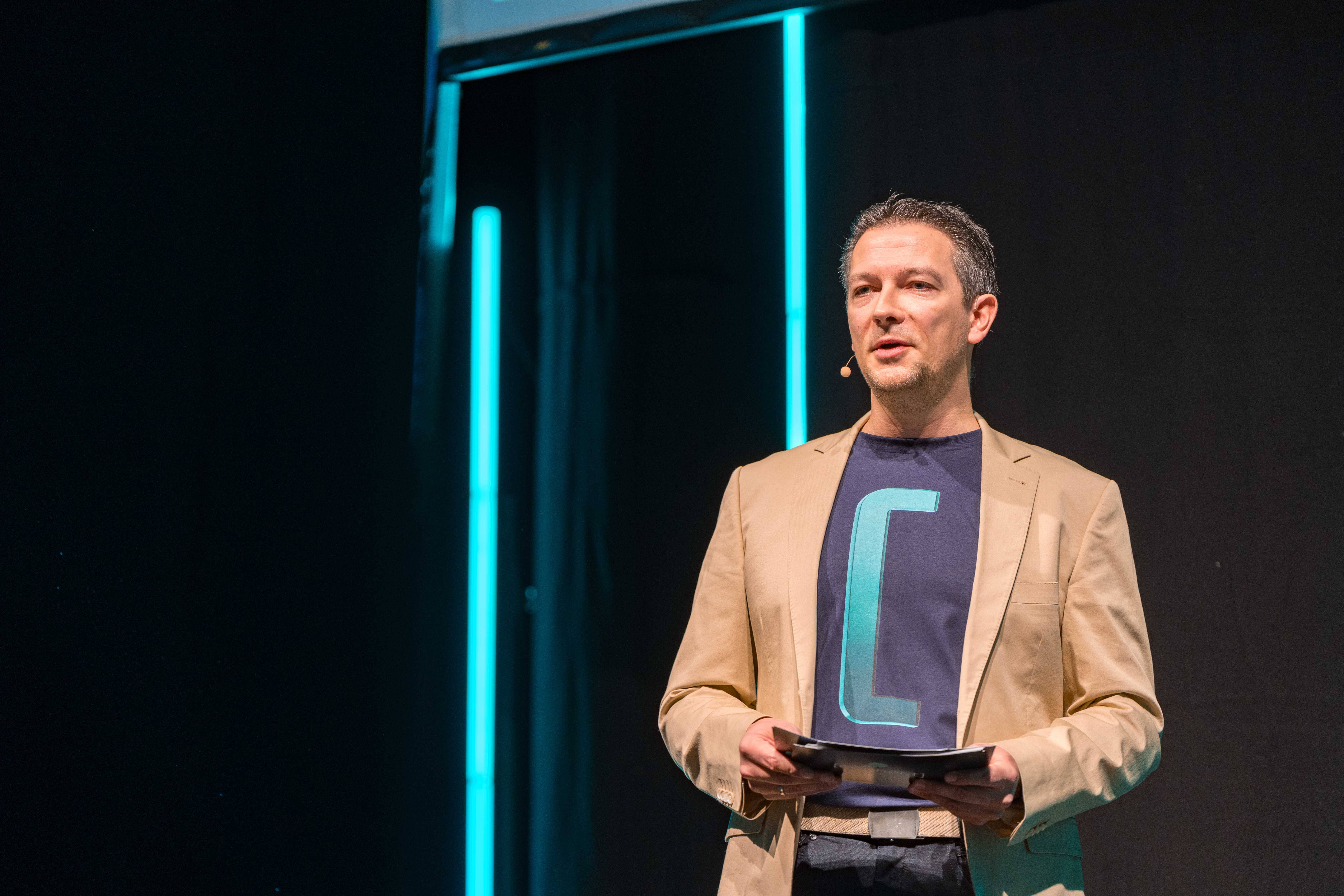
Translating the vision into practice: "As passionate tech pioneers, we set the pace"
t3n: The vision statement in the field of technology and innovation is: "As passionate tech pioneers, we set the pace of progress ensuring the future doesn't just happen, but is shaped by us." How is this claim implemented in concrete terms?
Martin Meinshausen: "This statement is our guiding principle – and we are filling it with many concrete measures. " For us, "setting the pace" means above all that we actively give our employees space, means and freedom to create something new.
In recent months, for example, we have created an innovation platform in which ideas are collected and further developed. At the same time, we have provided the tools so that ideas can also become prototypes. Every employee – regardless of the project – has access to this "Innovation Playground": CI/CD toolchains, repositories, cloud sandboxes, power platform resources and AI systems are available to everyone. This allows our experts to experiment and build innovative solutions outside of their day-to-day business without having to ask for resources first. The response has been great – the use of these environments is steadily increasing, which shows that the pioneering spirit is actually being lived."
t3n: What role do skills and further training play?
Martin Meinshausen: "In order to really set the pace, we need to know the relevant technologies. That's why we've launched training offensives – such as an AI Academy within the Center of Excellence (CoE) for AI, where managers and employees are trained in artificial intelligence, or intensive programs on low-code and automation. For example, over 80 percent of our managers have already undergone AI management training so that tech leadership is understood and lived at all levels."
The Center of Excellence (CoE): Internal contact points for expert knowledge
t3n: Since the summer of 2025, six CoEs (Centers of Excellence) have been active – from co-innovation to community. Which CoEs are there specifically?
Martin Meinshausen: "Our six Centers of Excellence form the heart of the tech transformation. Each CoE is a technical center of excellence that pools expertise across the organization and drives innovation in its field. Specifically, we have currently established the following six CoEs:
These CoEs are each staffed by a CoE lead – all experienced experts from our ranks – and draw in members from all locations and areas. It is important to note that each CoE works along a common model, our "6C model". The 6 Cs stand for Community, Co-Innovation, Competency, Coaching, Components and Consulting."
"AI will be the gamechanger in 2026"
t3n: Finally, a question about the future: Which CoE area do you think is crucial for the next few years?
Martin Meinshausen: "All six CoEs are important for achieving our goals. However, the topic of AI is of particular importance. However, the use of AI in products and processes is explicitly not only the task of CoE AI, but of all CoEs. Each CoE is responsible for the successful adoption of AI in the respective field. For example, the CoE Java is responsible for the support of AI products for software development, while AI products for service management are responsible for CoE ITSM."
t3n: Martin, thank you very much for the interview.